
A slow checkout page during a social media campaign can cost a growing business more than the difference between two hosting plans. That is why managed WordPress versus shared hosting is not simply a technical comparison. It is a decision about how much time you want to spend maintaining your website, how reliably it should perform, and what happens when traffic, orders or enquiries start increasing.
For Nigerian entrepreneurs, bloggers, agencies and online shops, shared hosting is often the affordable starting point. Managed WordPress hosting becomes more attractive when WordPress is central to the business and downtime, weak security or a slow website would affect revenue or reputation. Neither option is automatically better. The right choice depends on what your site does today and what you expect it to do next.
What shared hosting gives you
Shared hosting places several websites on one server. Each account has its own files, databases and control panel, but the underlying server resources are shared among customers. This arrangement keeps costs low, which is why it is one of the most practical ways to launch a first website, professional email address or small business presence.
A good shared hosting plan can still provide serious value. Features such as NVMe storage, LiteSpeed Enterprise, cPanel, free SSL certificates, malware protection and regular backups make it possible to run a fast, secure WordPress website without paying for infrastructure you do not yet need. For a portfolio, brochure website, personal blog or early-stage service business, that is often the sensible place to begin.
Shared hosting also offers flexibility. You can host WordPress, but you can usually install other website software, create email accounts, manage databases and use tools through cPanel. This is useful for freelancers and business owners who need one account to handle several straightforward online tasks.
The trade-off is that you take on more responsibility for your WordPress site. You will generally manage WordPress core updates, theme and plugin updates, performance settings and some troubleshooting yourself. Your website can also be affected by unusually high activity elsewhere on a shared server, although reputable providers use account isolation, resource controls and security tools to reduce this risk.
What managed WordPress hosting changes
Managed WordPress hosting is built specifically for WordPress websites. Rather than giving you a general hosting environment and leaving most of the site administration to you, the service is designed around the platform’s daily needs: updates, caching, security, backups, monitoring and WordPress-focused support.
The value is not that WordPress suddenly becomes maintenance-free. You still need to publish content, review plugin choices and keep an eye on your business. The difference is that much of the technical housekeeping is handled or simplified, so you can spend less time responding to avoidable issues.
A managed WordPress environment commonly includes server-level caching, WordPress-optimised configurations, automated backups, malware scanning and stronger safeguards against common attacks. Redis object caching and LiteSpeed-based caching, where included, can help pages load more quickly by reducing repeated work on the server. This matters for image-heavy portfolios, busy blogs, membership sites and WooCommerce stores, where every second of delay can discourage a visitor from continuing.
Support is another meaningful difference. General hosting support can help with account access, DNS, email and server-level issues. Managed WordPress support is more likely to understand WordPress-specific problems, such as a plugin conflict, cache behaviour, a failed update or a theme-related error. For a business owner without an in-house developer, that expertise can save time when a site needs attention quickly.
Managed WordPress versus shared hosting: the key differences
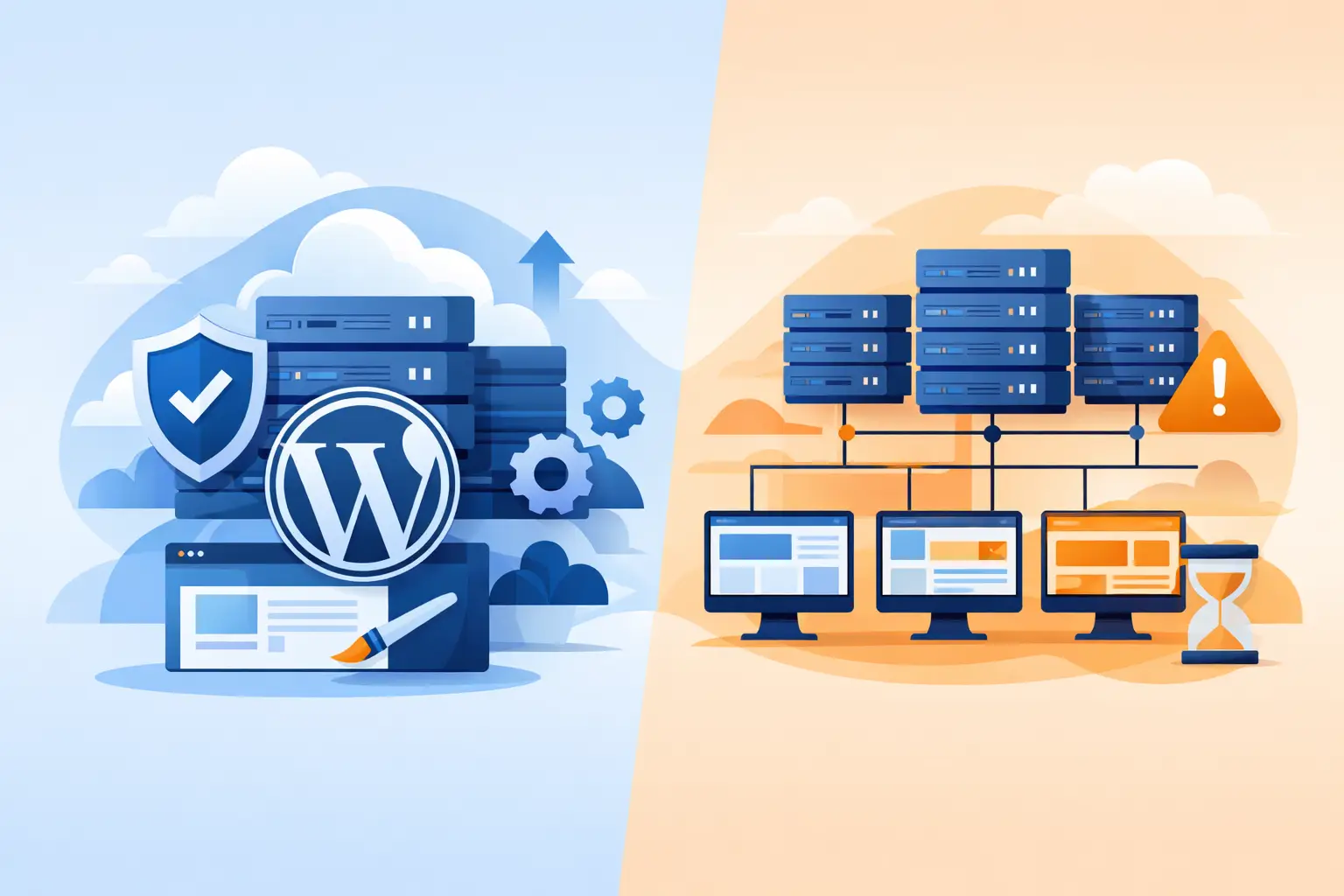
The clearest difference is the balance between price, control and convenience. Shared hosting is usually more affordable because its resources and management are shared across many users. Managed WordPress hosting costs more because it includes a more specialised environment and operational support.
Performance and traffic handling
A small shared hosting plan can perform very well for a modest site, especially when it uses fast NVMe storage and LiteSpeed Enterprise. A well-built WordPress website with compressed images, a lightweight theme and sensible plugins does not need an expensive plan simply to look professional.
However, traffic patterns matter. If a fashion store runs flash sales, a training provider opens course registration, or a business receives a sharp increase in visitors after an influencer mention, the site needs more consistent performance. Managed WordPress hosting is usually the stronger fit where speed under pressure is a commercial priority.
That said, hosting alone cannot repair a poorly built site. An overloaded page builder, uncompressed product images and too many plugins can slow down any server. Managed hosting gives you a better foundation, but good WordPress practices still matter.
Security and maintenance
Every WordPress site needs SSL, secure passwords, backups and regular updates. Shared hosting plans may include free SSL, malware protection such as Imunify360 and backup options, providing a strong baseline for smaller websites. The site owner still needs to maintain WordPress carefully and avoid installing poorly supported plugins.
Managed WordPress hosting adds more proactive oversight around the WordPress environment. Automated updates, managed backups, scanning and monitoring reduce the chance that routine maintenance becomes forgotten until a problem appears. This is particularly useful for business websites collecting customer details, online stores processing orders, and organisations that cannot afford to discover a fault weeks later.
No hosting plan can promise perfect security. A compromised administrator password or an abandoned plugin remains a risk. The practical goal is to reduce exposure, detect problems early and ensure there is a reliable recovery path.
Control and compatibility
Shared hosting generally gives you more freedom to configure a broad range of applications. Developers, web designers and agencies may prefer this versatility when they manage mixed client projects or require access to familiar cPanel tools. It is also a good choice for a website that uses WordPress alongside custom scripts, email services or other applications.
Managed WordPress hosting is intentionally more focused. Some server settings, plugins or unusual configurations may be restricted to protect speed and security for WordPress users. For most business owners, that limitation is helpful rather than frustrating. For a developer with a highly customised setup, it can be a reason to choose shared, cloud or another hosting option instead.
Cost and business value
Shared hosting wins when budget is the deciding factor. A new photographer, consultant or local business can establish a credible website, use a custom domain and create professional email without placing unnecessary strain on cash flow. Paying in naira also makes budgeting more straightforward for many Nigerian businesses.
Managed WordPress is easier to justify when the website produces leads, bookings, subscriptions or sales. If one day of downtime could cost more than the annual difference in hosting fees, paying for specialised performance and support is often a practical business decision rather than a luxury.
Which option fits your website?
Choose shared hosting if you are launching a first website, expect low to moderate traffic, want to keep costs down and are comfortable using cPanel and handling routine WordPress updates. It is also a sensible option for developers who need broader application flexibility or agencies hosting several small, uncomplicated client sites.
Choose managed WordPress hosting if WordPress is business-critical, your site is growing, you run WooCommerce, publish frequently, depend on lead generation or do not want maintenance tasks competing with your core work. It can also suit a business owner who values direct help from a team that understands WordPress rather than having to diagnose technical problems alone.
There is also a middle ground. Start on quality shared hosting, build your site properly and track performance as the business grows. When traffic, sales or maintenance demands rise, move to managed WordPress hosting. A provider that offers migration support can make that upgrade far less disruptive.
Build for the next stage, not only today
Your hosting should support the stage your business is in, but it should not trap you there. At GiddyHost, the practical aim is to give Nigerian businesses a fast, secure starting point with room to grow, whether that begins with affordable shared hosting or a managed WordPress environment.
Before choosing, consider the cost of your own time. If spending Saturday evening resolving plugin updates, restoring backups or chasing a slow site would take you away from customers, managed WordPress may earn its higher price. If your site is simple, new and well within its resource limits, shared hosting can deliver exactly what you need while you invest the difference in building the business.